Fly Like and Eagle
To Capture the Ultimate Bald Eagle Photograph
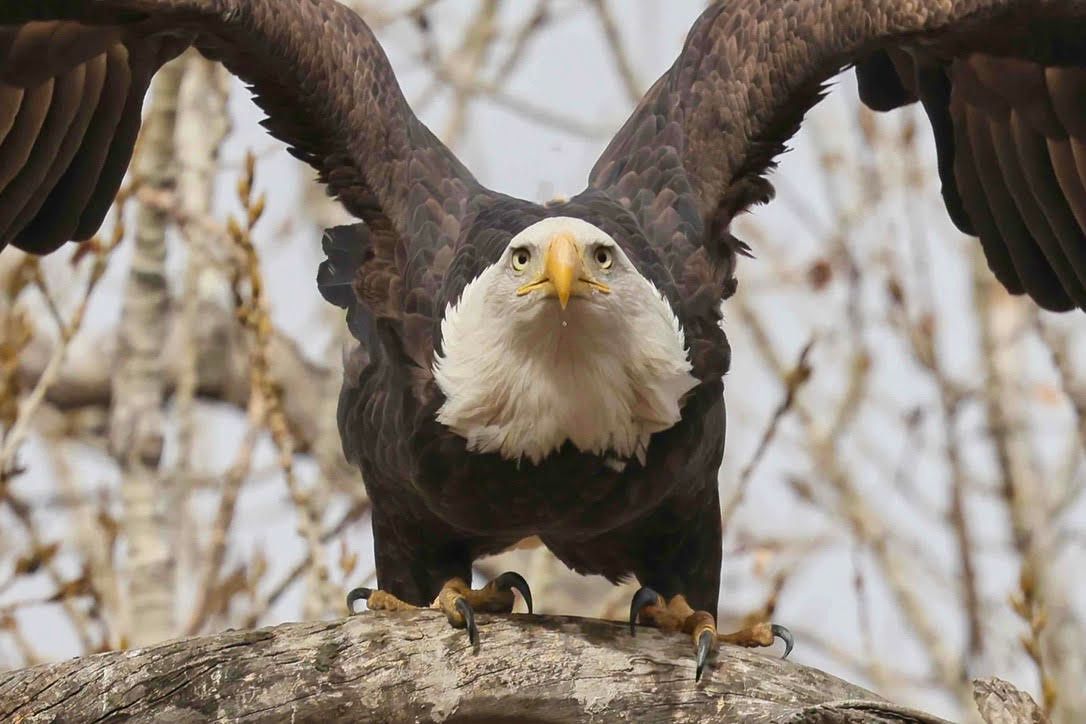
I have been striving to capture the ultimate bald eagle photograph since 1998. I’ve gotten several good ones, but I'm still working for the “money shot.” For years, while living in Iowa, I would drive the Mississippi and Iowa Rivers in search of wintering eagles. Or I would visit reservoir dams in Cedar Rapids, Pella, and Des Moines where the eagle would gather catching fish in the open waters as the dam spilled below the lakes.
You see, they are America’s National Bird for a reason. Bold in the presence with eyes that look through you like Jack Nicholas in “The Shining.” Yet, the grace with which they take flight is incredible. Long, floating wings moving up and down in a wave like the stars and stripes flowing in the breeze.
I saw my first bald eagle while driving over the Platte River Bridge on I-80 between Lincoln and Omaha, NE. This was in the late 1980s when the majestic birds were beginning their comeback after the North American population had been devastated by DDT. DDT (Dichlorodiphenyltrichloroethane) is a pesticide once widely used globally for pest control in agriculture, but its severe environmental toxicity led to its 1972 ban in the U.S.
DDT caused bald eagles to lay eggs with shells so thin they would crack under the parents' weight, preventing successful hatching. The chemical accumulated in fish, which eagles ate, leading to reproductive failure and near bald eagle extinction by the 1970s.
Today, the U.S. bald eagle population is booming, with over 316,000 individuals and more than 71,000 nesting pairs in the lower 48 states as of recent estimates (2020-2021). It is a huge recovery from near extinction, thanks to conservation efforts.
With the winter migration, bald eagles can be found throughout Colorado. Estes Park is blessed to have a nesting pair that lives in the area, often spotted on dead trees or high on power towers near Lake Estes. The lakes on the front range also provide many winter feeding opportunities. As the lakes partially freeze, eagles can often be seen in shore trees or sitting on the ice watching migrating water fowl.
I have driven the roads, searched the lakes, and captured several images of bald eagles. Nice ones, but not yet the “money shot.” The “money shot” is that image that makes you gasp when you see it. I’ve gotten several “coin reaction” shots, maybe even some Washington or Lincoln bill shots, but no Benjamin Franklins. I want that $100 bill capture.
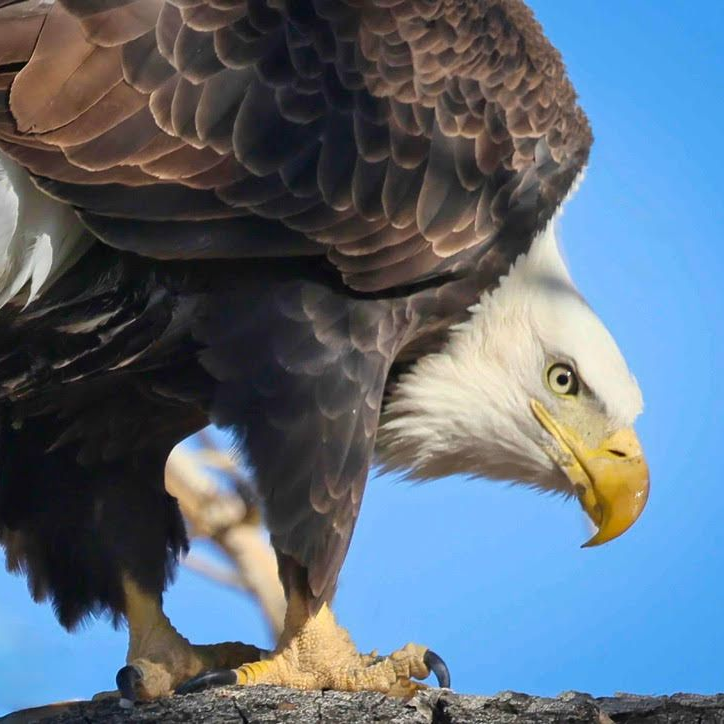
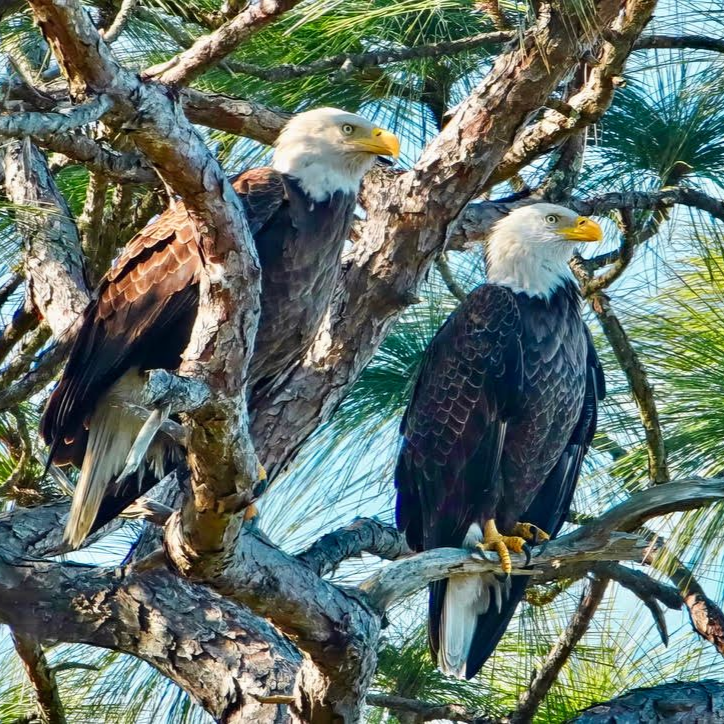
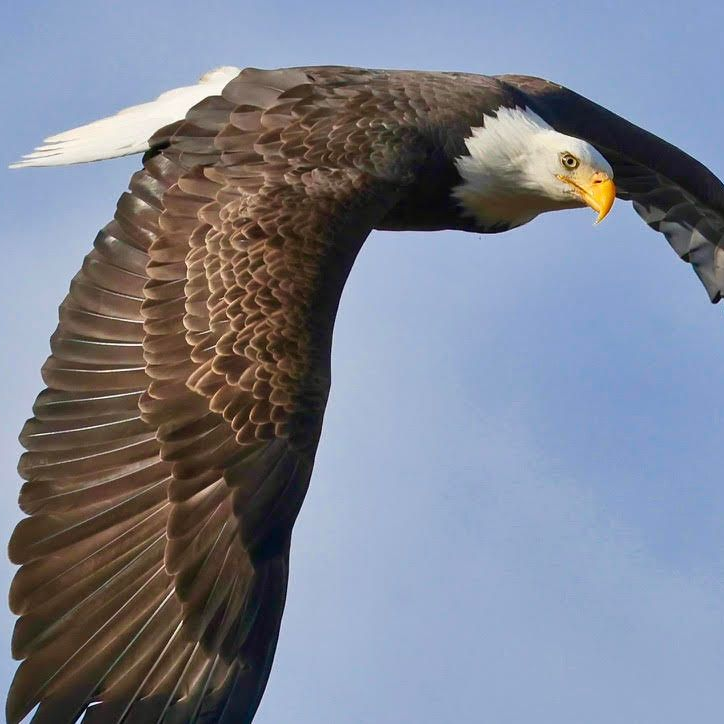
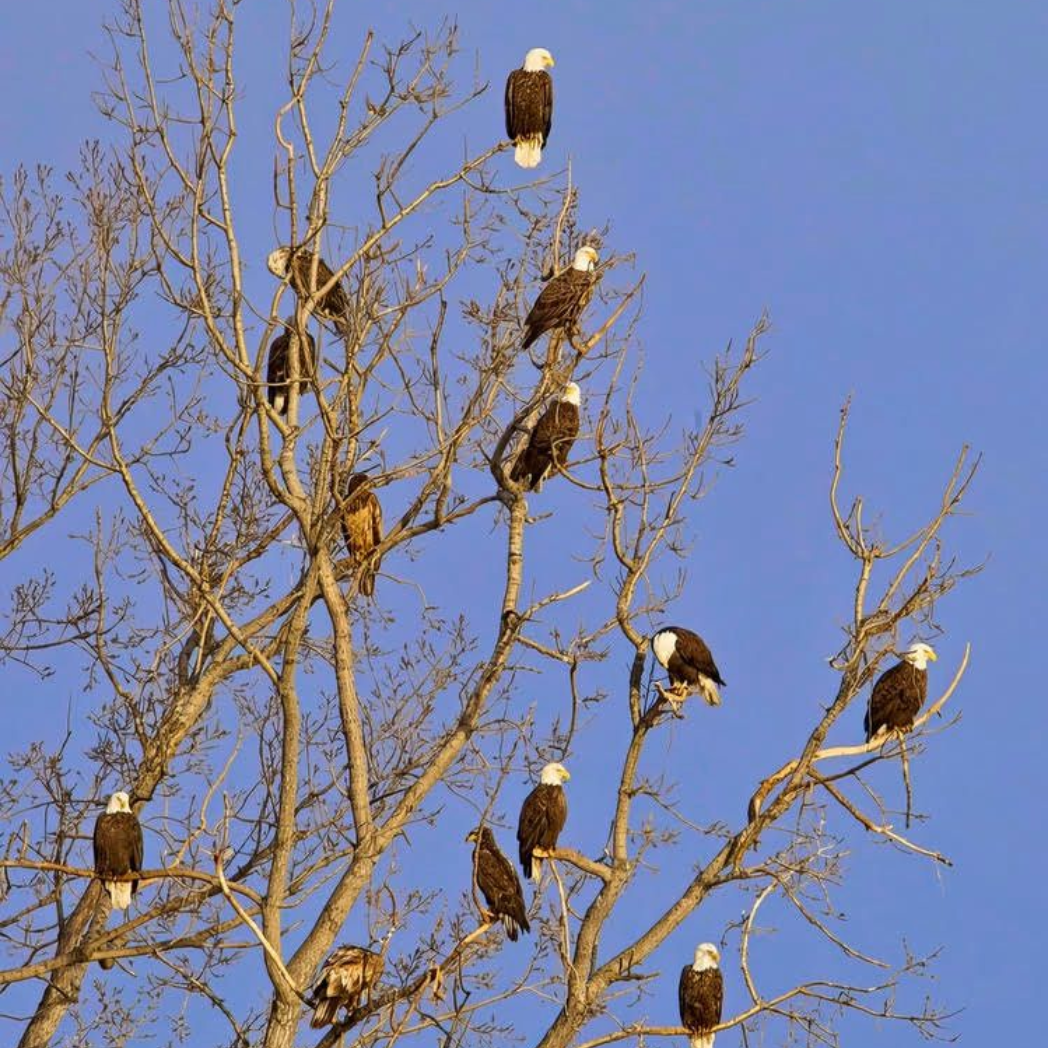
Many days throughout the winter, I’ll travel the canyon highways to the lakes of the front range in hopes of the “money shot.” I see a lot of immature bald eagles, all brown with hints of white transition by three years old when their white heads begin to gain prominence. At five years old, they are mature. Their white heads surround yellow predominant eyes, bodies highlighted by white tails and brown feathers with tips a slight white when shining in the morning sun.
This winter, standing by a front range lake, twice I got near “money shots,” maybe the value of a Ulysses S. Grant $50 bill. As I waited, my camera on a tripod, a bald eagle landed high up in a tree. For an hour, I watched him, hoping he would take flight into the wind in my direction. My patience was rewarded when luck, timing, and awareness converged.
Later that morning, another eagle landed in a nearby tree, fish in his talons. I set my camera, capturing images of him picking bites of the fish. As he finished, he turned on the tree branch to face me.
I ducked behind the camera, focused on his intimidating eyes, and watched. Then he moved to fly, and I captured him in mid-take off, his eyes bearing down upon me as one drop of water fell from the point of his yellow beak.
It was a “near money shot,” and special because it was taken from a lower angle, eyes bearing down, and perfectly aligned to fly toward me.
As I continue to seek the “money shot,” I will enjoy every moment searching, seeking, and striving to capture the bald eagle image that makes you gasp when you first see it. America’s national bird is worthy of such an effort.