Where the Moose Roam
Tetons Moose Forage on the Bitterbrush Plants
Moose have intrigued me since the early 1980’s when I had my first close encounter on the west side of Rocky Mountain National Park. Maybe it’s the size, a thousand pounds plus of long, lanky legs, thick bodies, camel faces, and an expression with an intimidating glare, especially if they take exception to your presence.
So in December 2025, I ventured to Grand Teton National Park in search of the massive land beasts - Shiras moose. I had a Canon R5 mirrorless camera, a 100-500 mm lens and a 600 mm prime lens with a 2x extender that could keep me safe while bringing moose up-close and personal through the camera’s viewfinder.
Other photographers had shared that moose in the Tetons like to forage in winter among the bitterbrush plants. Apparently, they gather in lower elevation areas and sagebrush flats where the wind keeps the snow shallower, exposing their main winter food, bitterbrush.
After a comforting drive diagonally across Wyoming where antelope grazed along the fence lines, I drove the mesmerizing mountains over Togwotee Pass. Arriving in the Grand Teton National Park, I began my search for the massive ungulates.
To my wonder, almost immediately I found moose. Black spots among the sage green and brown, they were a half mile into fields filled with bitterbrush. Their heads were down, their antlers barely visible among the brush, as they ate their favorite winter shrub.
I pulled off the side of the road, amazed that there were actually big, beautiful bull moose visible like boulders in a wheat field. Through my viewfinder, I was impressed with the details but wished they were closer. As the sun set over the massive peaks to the west, their dark bodies glowed around the edges - back lit.
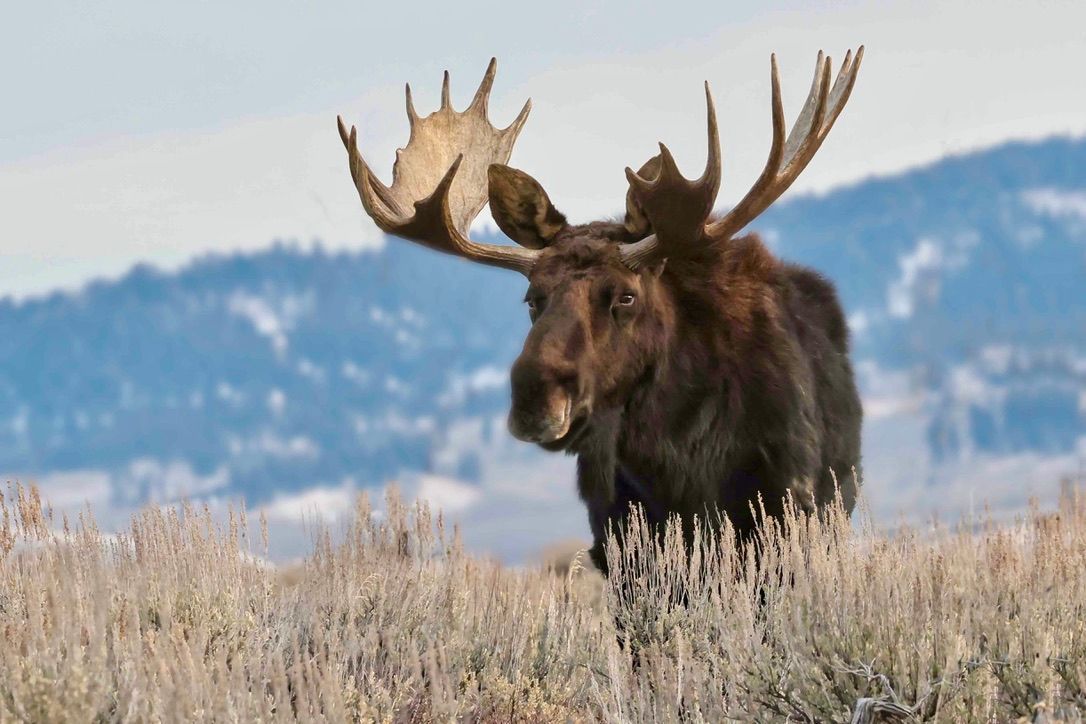
The next morning I was out at sunrise, and so were the moose. I relished the morning light, brightening their dark winter coats with the fur edges glowing gold. Their antlers, free of velvet, were light tan with long, pointy tines, the color contrary to their dark coats.
My camera in hand, zoom lens attached, I knelt low in the sagebrush. The lower I was the more dynamic the moose appeared rising above the old west prairie. I saw the image, and clicked the shutter. A ground of sage and tan was the setting bringing forward the dark gray-brown of an intimidating antlered bull moose.
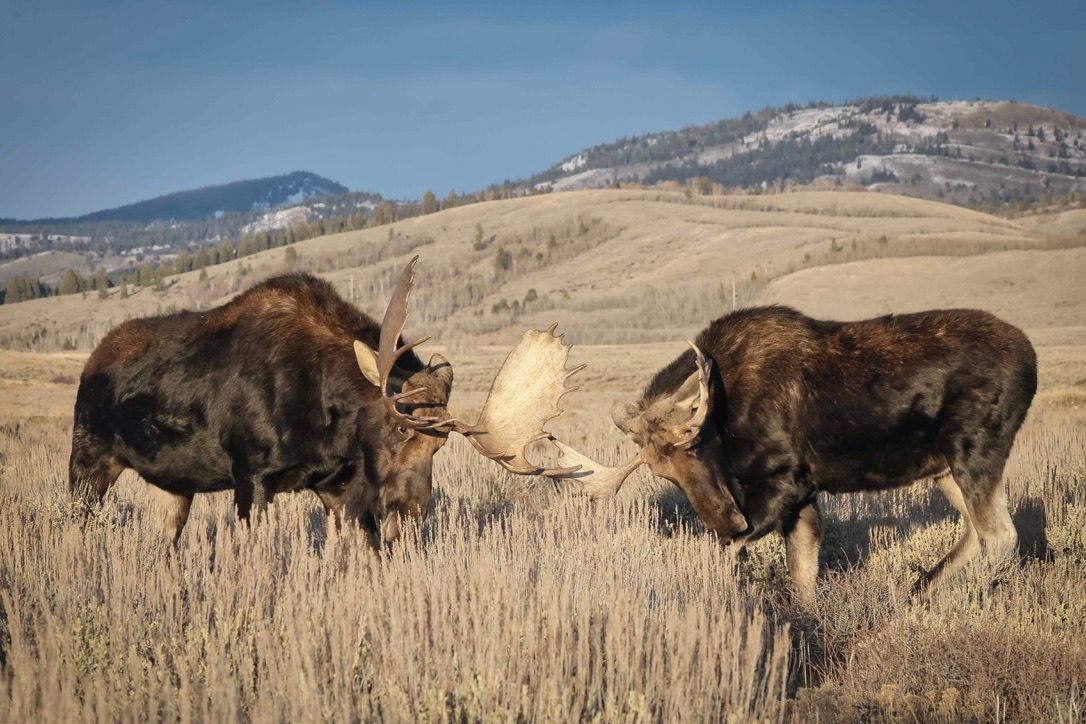

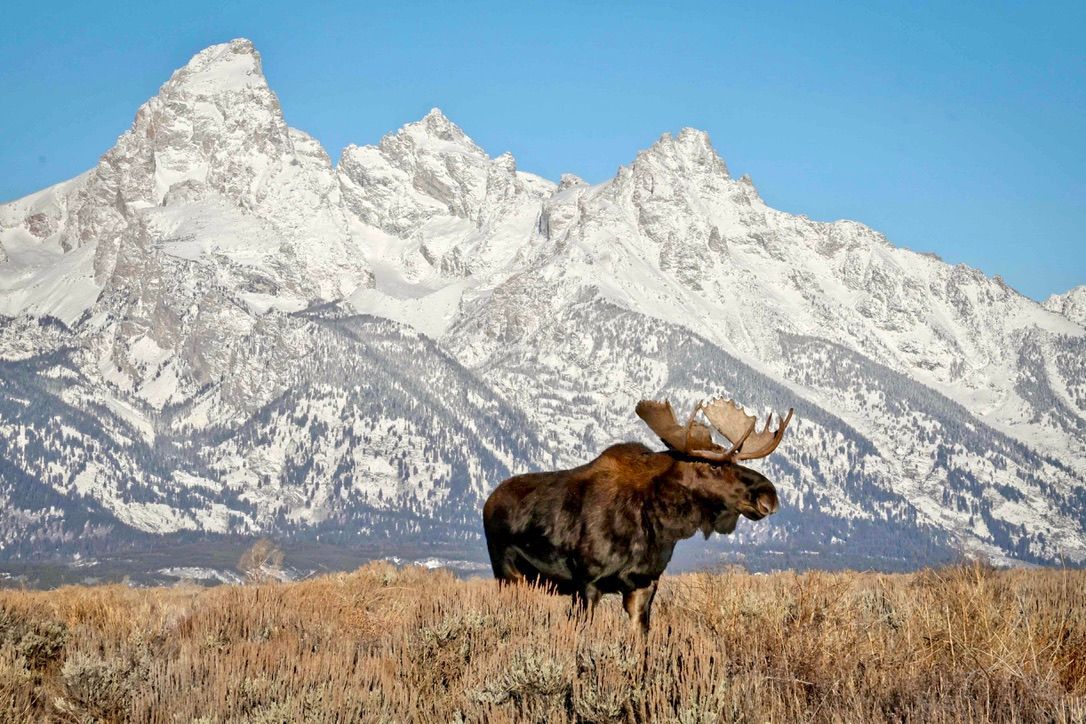
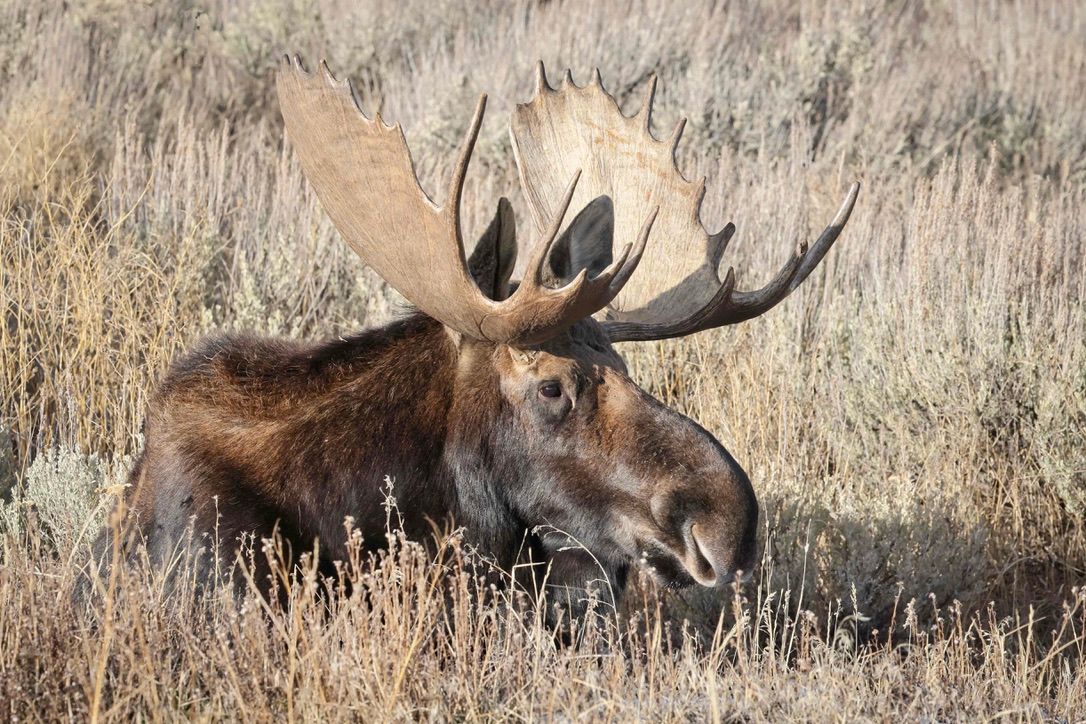
There were two here, three there. Where one group grazed another three lay digesting their breakfast, hints of impressive antlers peaking out above the sage. It wasn’t just the moose, it was the setting. Flatlands of wandering moose feeding before the towering, sharp peaks the Native Americans Shoshones called “Teewinot” meaning many pinnacles.
It was on the third day that the moment happened. Water traversing the natural meadow drew the moose in. Driving, I crested a small rise to see an impressive bull nearing the water’s edge on the far shore. Then, I could see behind a clump of prairie grass a calm, massive, mellow bull resting. I knew once he stood, he would be frightening in his size and the glare of his eye.
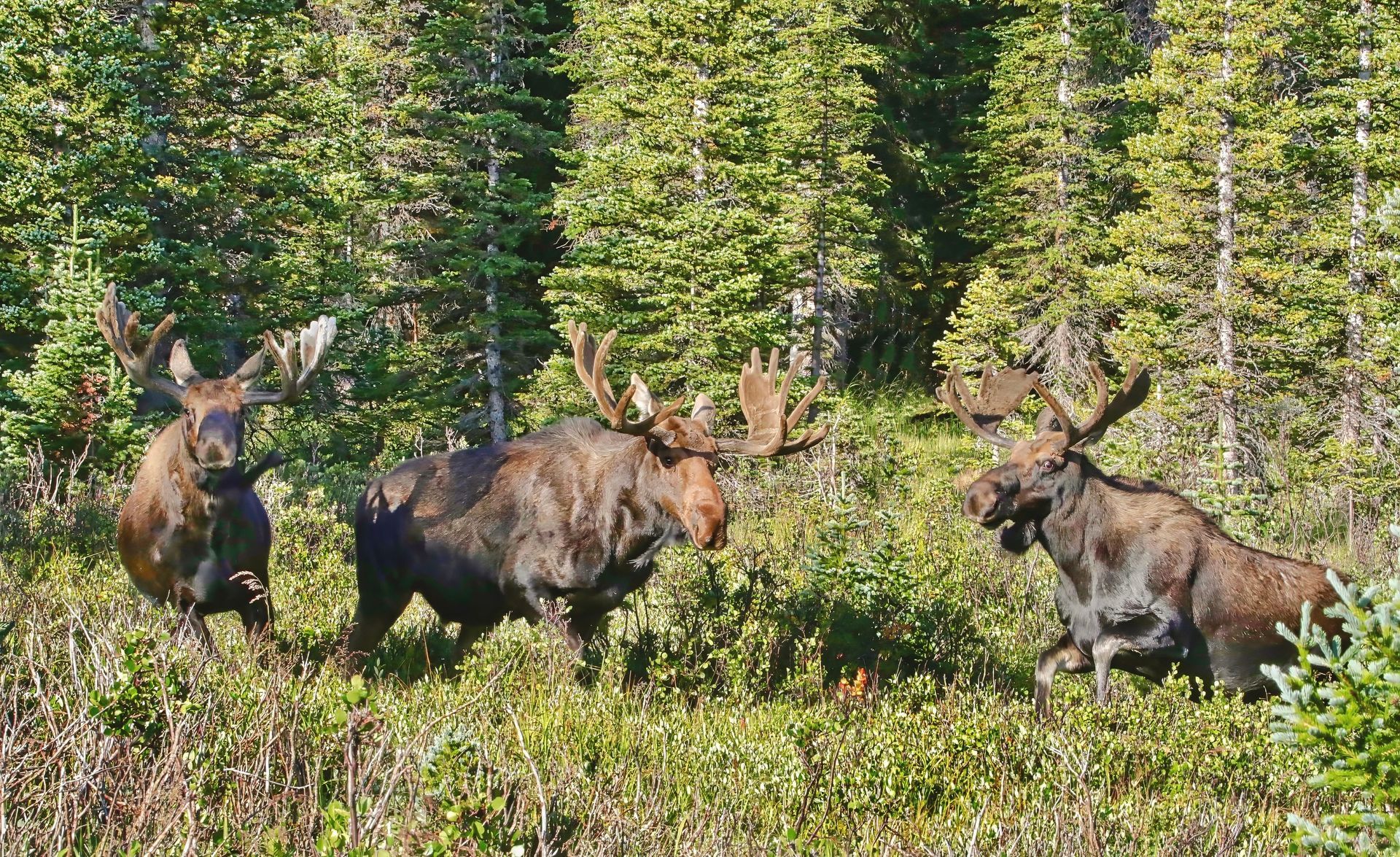
I captured images, one after another. Then I saw a third bull, smaller but feisty moving directly across the field toward the water. As he did, the most impressive animal stood to a awe-inspiring size. The three gathered, moving into the water.
To me, it would be ice cold. To the moose it was refreshing, and they drank. Revived, they exited the water moving toward the group of photographers where I stood. Skilled in our own movement, we backed away while capturing shots at the same time. How we walked backwards through the tangled web of bitterbrush while looking through a tiny viewfinder and pushing the shutter to capture special pictures was a talent in itself.
Moving behind my vehicle, I lowered my camera watching them. Dark spots in a field had become towering animals with powerful chests and daring antlers of imposing paddles. The largest bull’s antler spread exceeded forty-five inches with long tines extending from their paddles.
As they moved, I captured their actions. Then one bull turned to the west, the sunlight brightening his winter coat as he did, and the pointed peaks of the snow covered Tetons rose up behind him.
I took the classic shot. The white covered Tetons were a backdrop to the prairie sagebrush surrounding him, and one bold, impressive moose dominated in the foreground. More than a moose picture, it was a dynamic scene capturing nature’s incredible beauty.