Bright, Yellow Eyes
Great Horned Owl are Like Magnets to My Camera
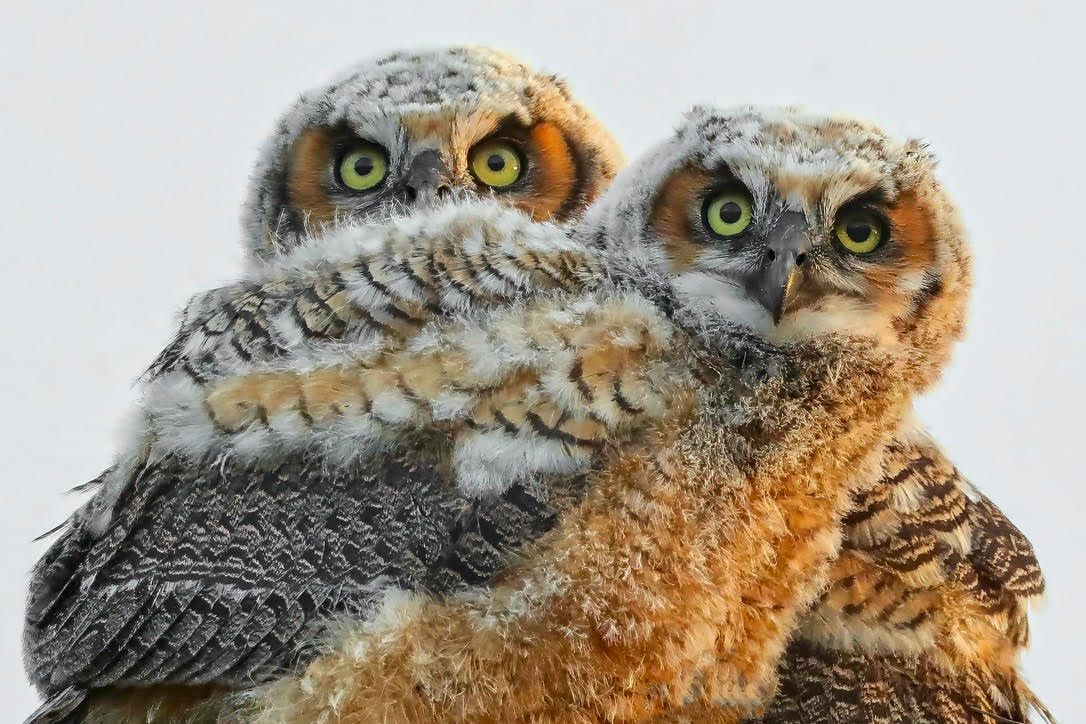
The big, bold, and bright yellow eyes of a Great Horned Owl are like magnets to my camera. Taking their picture is capturing not only the eyes but looking into the soul of these large raptors. While the eyes attract me, the texture and color of their feathers make them a beautiful bird to photograph.
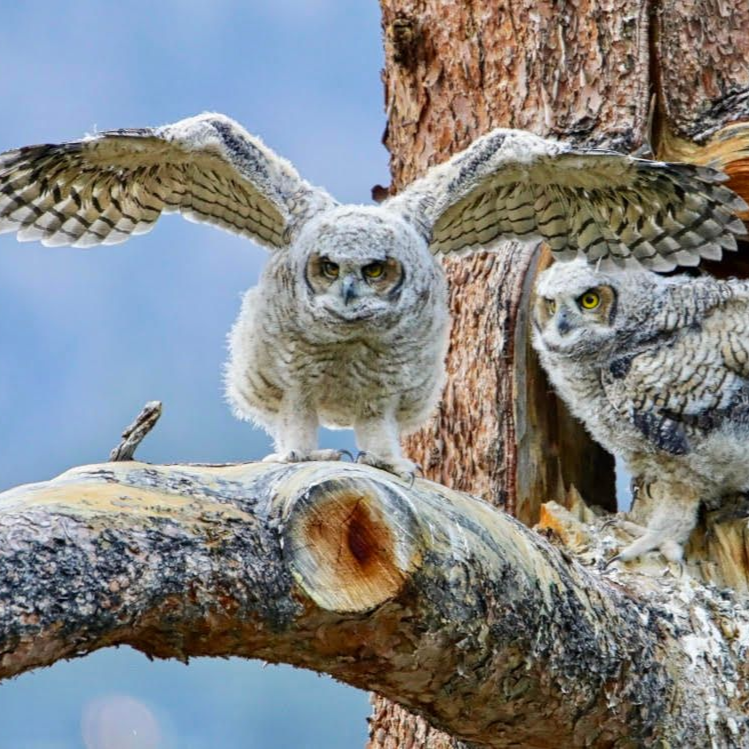
I captured my first Great Horned Owl images right here in Estes Park. While the smaller male sat in a nearby tree watching guard, the female spent time in the heart-shaped nest hole of a ponderosa pine tending to her three owlets. To see the owlets peaking from the tree’s heart-shaped nest was a daily thrill as I captured the owlet’s growth.
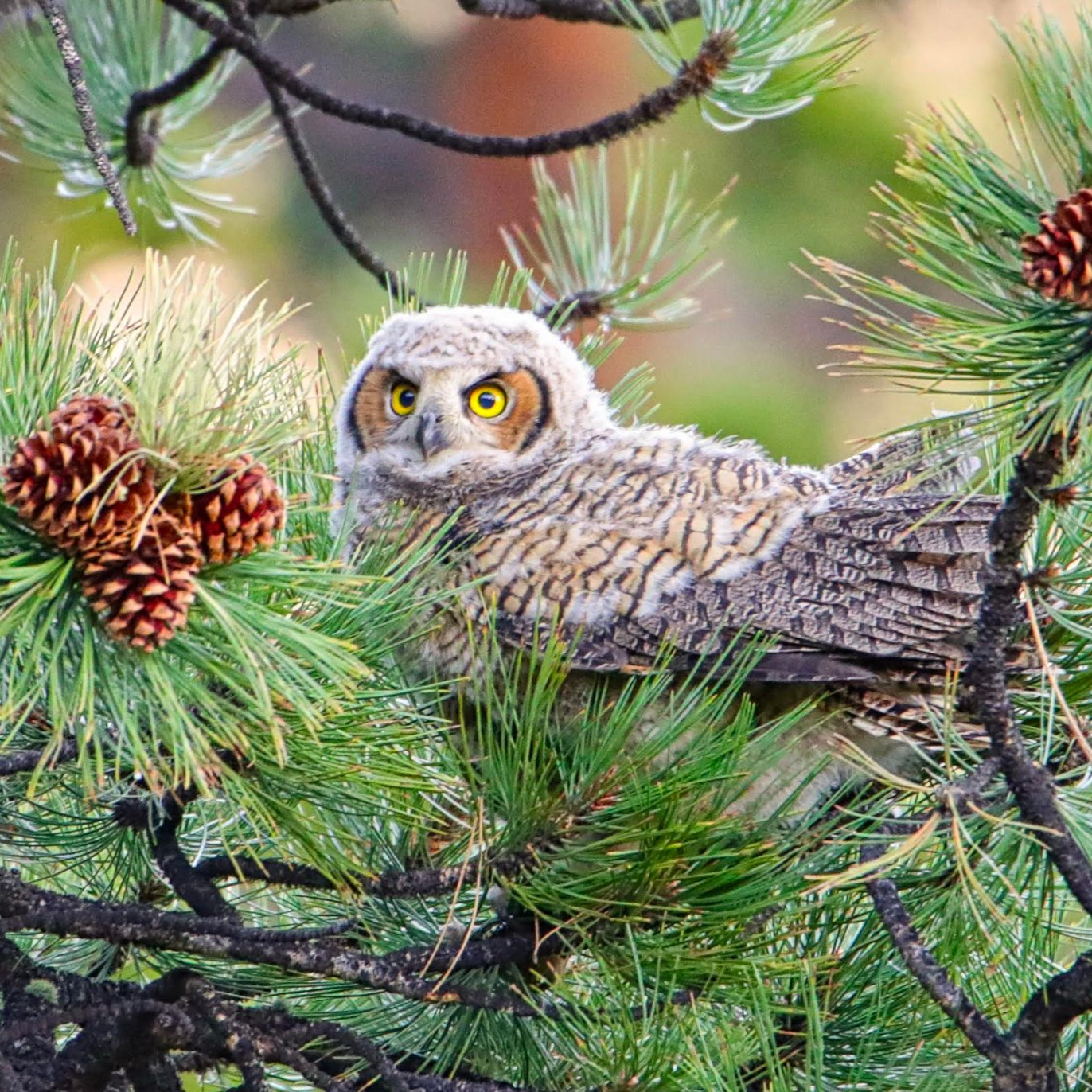
One morning, all alone at the tree, I photographed two of the owlets branching. They hopped, climbed and fluttered, testing their wings for flight. Then, one young, brave owlet flapped her wings, took a leap of faith and flew for the first time. Landing in a nearby pine, her yellow eyes were offset by the beautiful brown and gray of her feathers surrounded by the deep green pine needles.
Two years ago, wintering in Clearwater Beach, FL, there were two nests. Nests may be the wrong word because Great Horned Owls do not build nests. Instead, they take over abandoned nests from other large birds or they might use tree cavities or rocky ledges. Not building contractors, they are renters.
]In Florida, I found one nest in the cavity of three branches forking outward. One morning, a brave young owlet ventured out onto a high branch moving toward where her mother was perched.
I photographed her adventure as she wattled and hopped high on the branch like a Flying Wallenda, eventually reaching her mother. When she did, the mother bent down, nuzzling her baby in a show of tender love. It was a precious moment of affection.
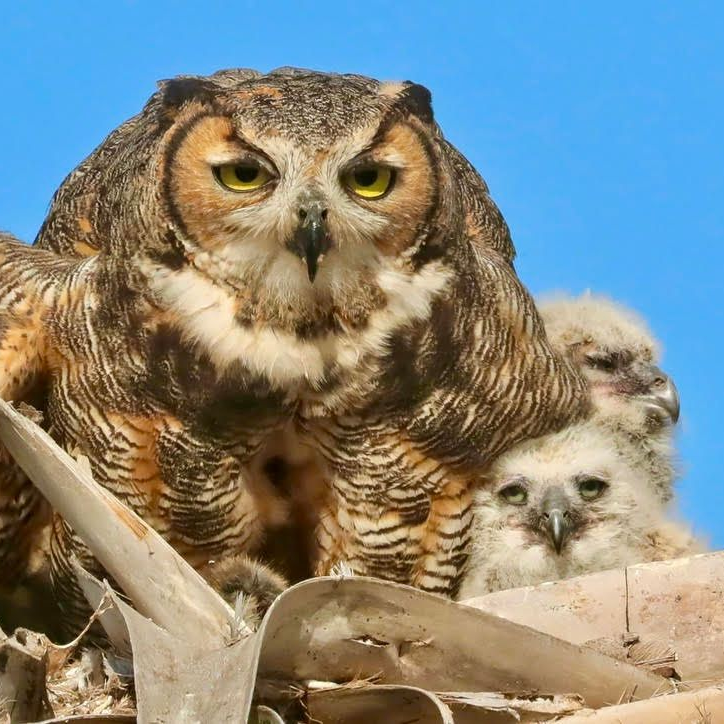
My favorite nest was in a palm tree along the Gulf of Mexico. The tree had died, the palm fronds broken away, leaving a flat top for the owls to perch. On my first visit, I watched the owlets tucked under the feathers of their mother. Protected from the elements, their downy feathers and yellow eyes peeking out in curiosity.
A few weeks later, a monsoon of March brought torrential rains for three straight days. I worried about the owlets, exposed on top of a frondless, dead palm tree being plummeted by 72 hours of driving, violent rain.
On the fourth day, the rains broke and the sky was a rich, tropical blue. I headed out early to check on the owlets. I feared they had succumbed or been knocked from the tree top, falling to the ground where they would be vulnerable to the attacks of mature raptors, hungry bobcats, or the massive jaws of a Florida alligator.
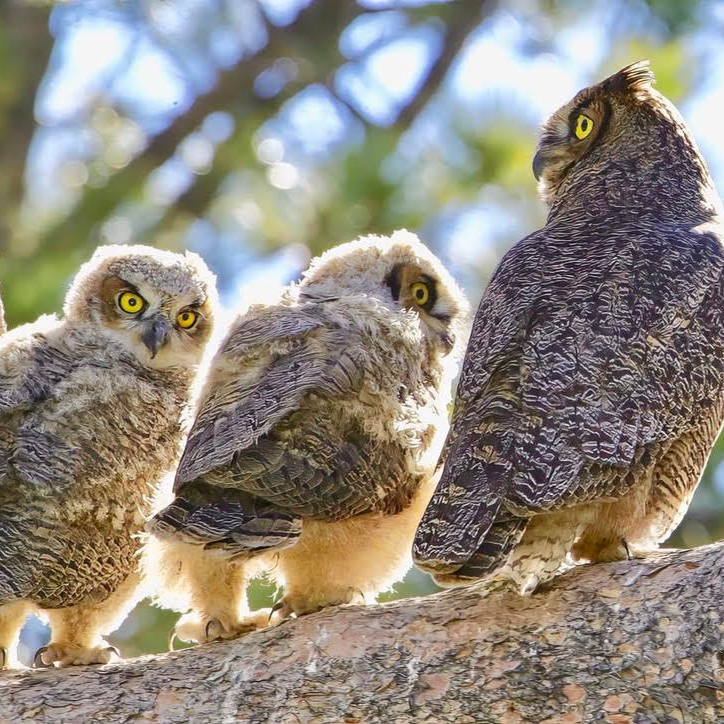
Thankfully, I found them alive and well as they sat on top of the palm waiting for my arrival. As I set my camera, they watched me. Their fluffy, soft, downy feathers had begun their transition to their juvenile plumage, the “in–between” feathers before their adult plumage developed.
Once I focused my camera, their curiosity grew, and they stood, one behind the other. Their bright, yellow eyes watched my every move. I was relieved by their hearty nature and the healthy presence of their monsoon survival.
One of my favorite Great Horned Owl images was captured at the entrance to Bear Lake Road in RMNP. It was the moment of dawn as I moved by the Kiosk getting a welcoming nod from the smiling ranger. As I greeted her, I saw a flash of movement pass by my car. Looking up, an owl opened its wings, slowing to a floating landing on the remains of a ponderosa pine.
Pulling over, the light was low, the image difficult to capture, but I am a photographer. So I photographed the owl, working my settings to adapt to the challenges of low light.
When I got home and put the images on my computer, I was thrilled. There on the tall trunk of a wind broken tree sat the beautiful, mature Great Horned Owl. The background of the image was an abstract of greens creating an image like soft, rippling watercolors.
This year, I have already found a nest with the mother tending to her eggs. As I visit from a respectful distance, I will watch the owlets turn from insulating natal down to their dark, spiky pin feathers and into their juvenile plumage. It is then, they will leap bravely into the world of adult raptors, flapping their wings as they fledge into freedom beyond the nest.
The big, bold, and bright yellow eyes of a Great Horned Owl are like magnets to my camera. Taking their picture is capturing not only the eyes but looking into the soul of these large raptors. While the eyes attract me, the texture and color of their feathers make them a beautiful bird to photograph.
I captured my first Great Horned Owl images right here in Estes Park. While the smaller male sat in a nearby tree watching guard, the female spent time in the heart-shaped nest hole of a ponderosa pine tending to her three owlets. To see the owlets peaking from the tree’s heart-shaped nest was a daily thrill as I captured the owlet’s growth.
One morning, all alone at the tree, I photographed two of the owlets branching. They hopped, climbed and fluttered, testing their wings for flight. Then, one young, brave owlet flapped her wings, took a leap of faith and flew for the first time. Landing in a nearby pine, her yellow eyes were offset by the beautiful brown and gray of her feathers surrounded by the deep green pine needles.
Two years ago, wintering in Clearwater Beach, FL, there were two nests. Nests may be the wrong word because Great Horned Owls do not build nests. Instead, they take over abandoned nests from other large birds or they might use tree cavities or rocky ledges. Not building contractors, they are renters.