The Season of Dreadlocks
The Elk & Moose do a Bob Marley Imitation
It’s a short but transforming season. I call it the season of dreadlocks. That’s when the elk and moose do their best Bob Marley imitation, letting their “hair down,” if you will. Or, more accurately, their velvet down. For the elk, that is usually the middle of August. For moose, they typically let their locks down during the week of Labor Day.
In the spring, when bull elk and moose begin to regrow their antlers, the antlers are covered with a thick layer of velvet. The velvet supplies blood, oxygen, and nutrients needed for rapid bone growth. You see, their antlers grow up to one inch per day making them one of the fastest-growing types of living bone tissue.
For a photographer, this soft, fuzzy skin layer can provide beautiful highlights of sun brightening the edges of a backlit ungulate’s velvet. The velvet also protects the delicate growing tissue and provides feeling so the animal avoids hitting things before the antlers fully harden into bone.
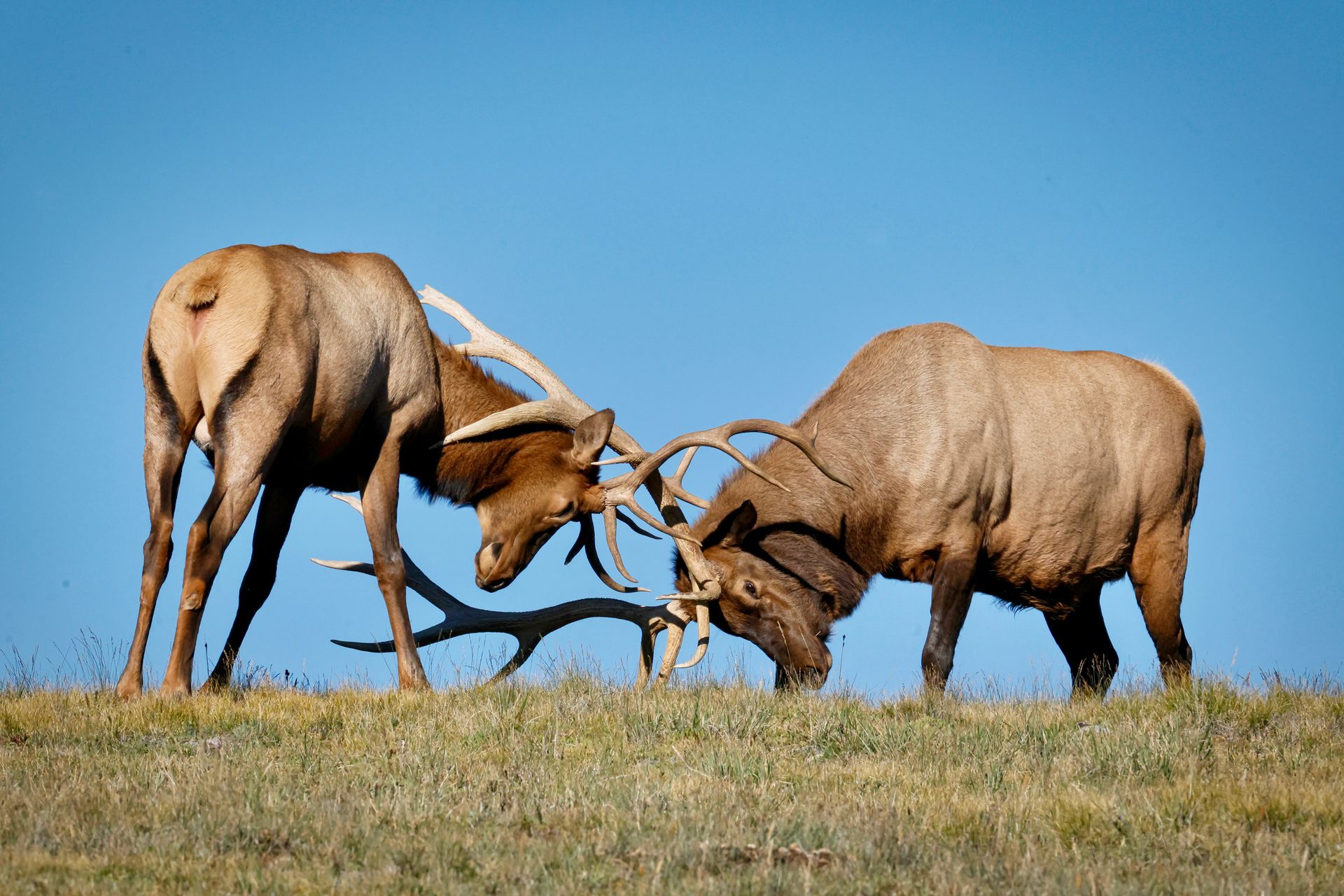
In late summer as the elk and moose rut season approaches, rising testosterone levels cut off blood flow to the antlers. This is when the dreadlock effect happens. The velvet dries, dies, and peels off so the bull elk and moose can use their hardened antlers for sparring during the autumn breeding season. Here’s how it works.
In August, hormone changes in bull elk and moose cause rising testosterone triggering the end of antler growth.- The blood vessels that feed the velvet are pinched off and close, stopping the flow.
- This causes the fuzzy, velvet skin to dry up and start to peel away, hanging down as it sheds.
- When only a few bits of velvet remain, the bull elk and moose rub their antlers on trees and bushes stripping away the remaining tissue.
- Thus, the antlers are clean and sharp, ready for sparing during the mating season.
When the fuzzy, velvet skin starts to peel away, this is the season of dreadlocks. Throughout the years, I have seen many bull elk and moose with dangling velvet, having begun to peel away and hanging from their bone hard antlers. Like dreadlocks on a reggae master, they are long locs of rope-like velvet.


When I first saw an elk with dangling velvet, I was so excited. It must have been in the 1990’s on a rare August vacation. I remember seeing a nice sized bull elk among the thwarted growth of greenery near the top of Old Fall River Road. Capturing the shot was unique because I had never seen the phenomenon before. My first dreadlock shot.
For years it was one of my favorites. Then, on August 15, 2021, I came across a group of bull elk, all shedding their velvet. As I focused my camera, two stepped around a small evergreen, their velvet hanging down long and prevalent. I captured the moment with clarity and beauty, still my favorite elk dreadlock image.
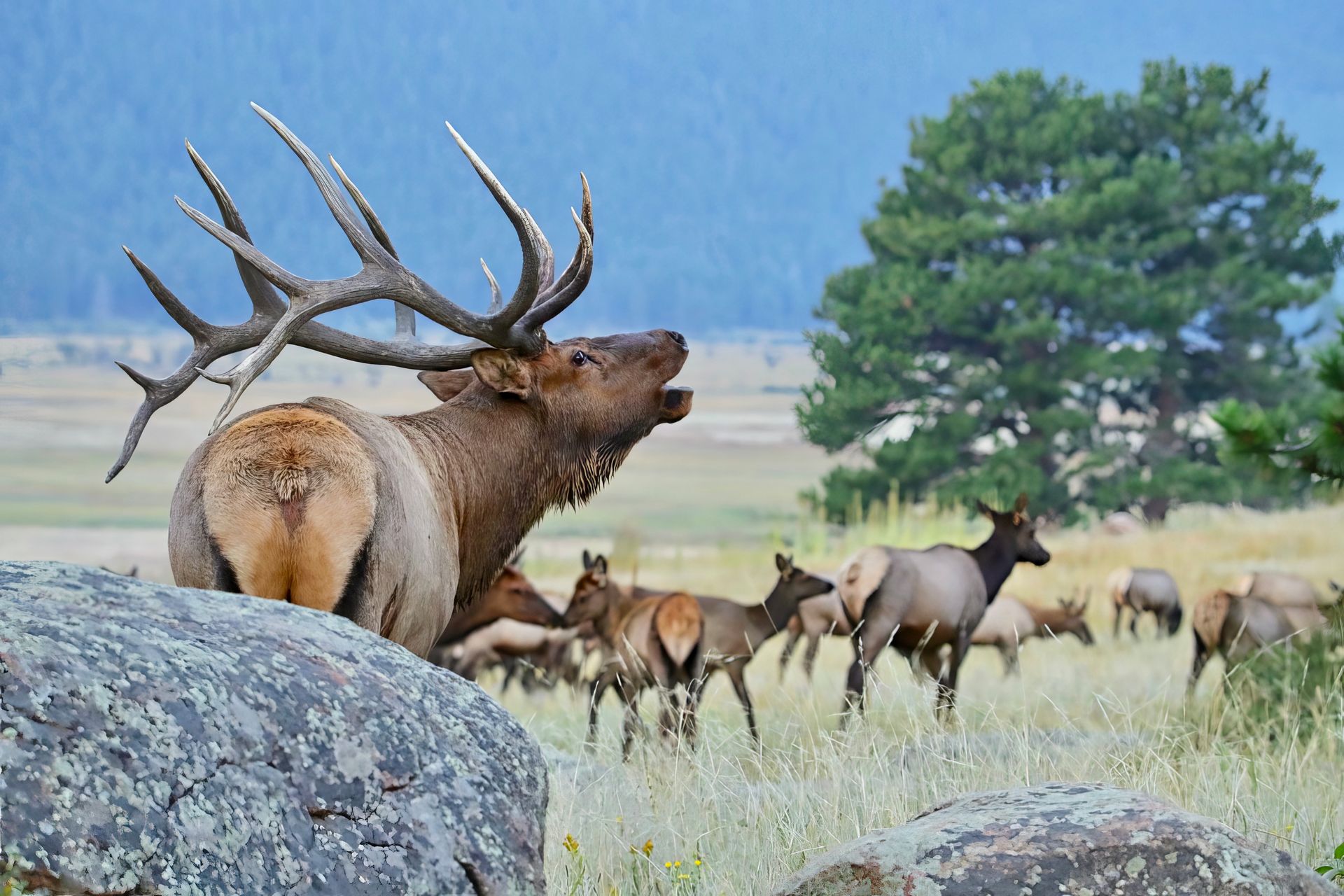
It was August 11, 2023, I came upon a handsome bull elk laying peacefully in an open meadow, the Engleman spruce a perfect backdrop for a photo. With testosterone healthy, he lifted his head to offer a powerful bugle, a prologue to his intentions. As he did, the shedding velvet hung down over his neck in a way that would have made Bob Marley proud.
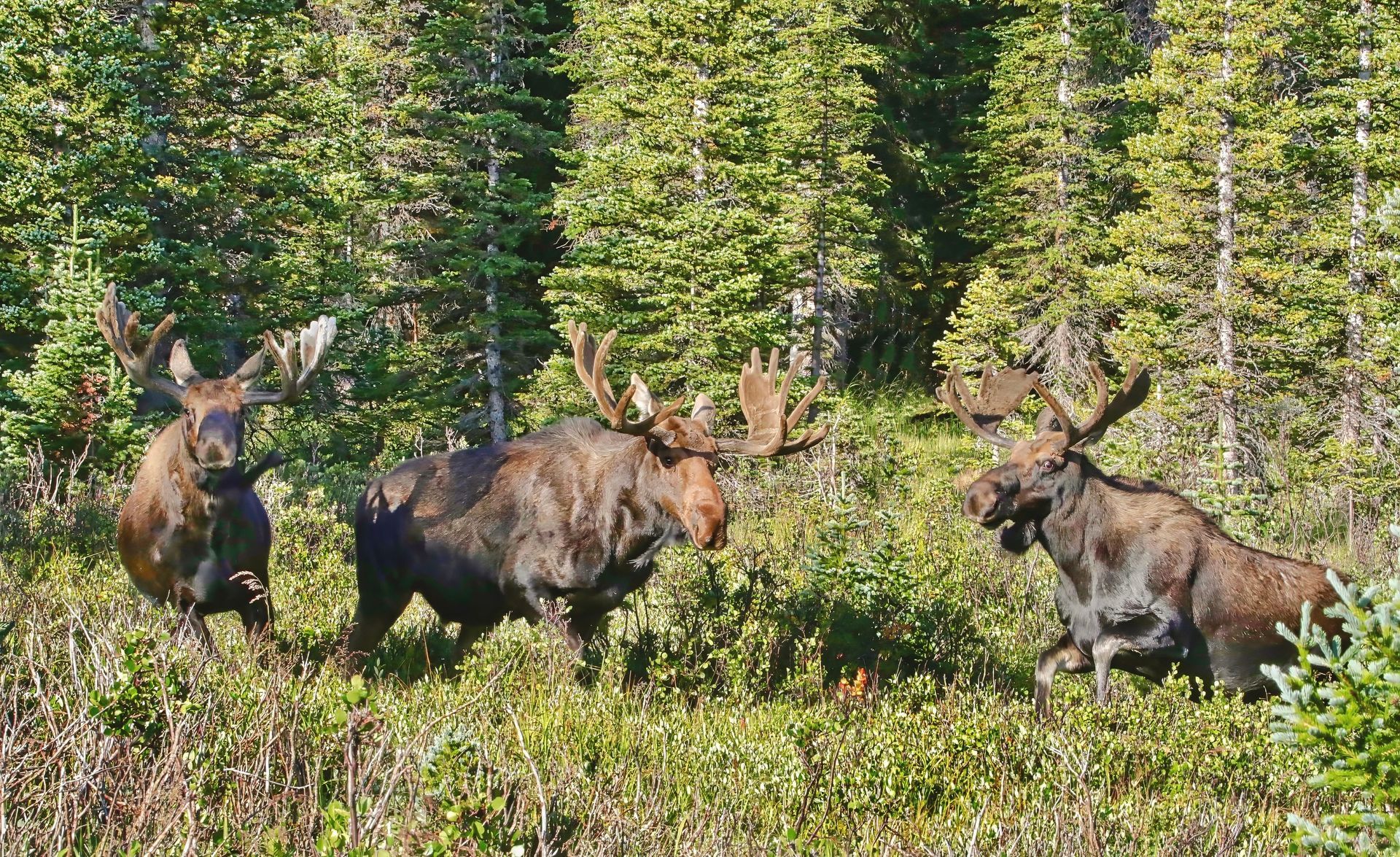
Moose are similar, but their shedding happens a couple of weeks later. The days surrounding Labor Day seem to be their time of transition. On September 7, 2021, I came upon a bull moose, similar to the elk, laying in a field. Its velvet was drying, peeling in bits and pieces as it fell from his paddles. It wasn’t a beautiful sight, but interesting in the transition caused by testosterone.
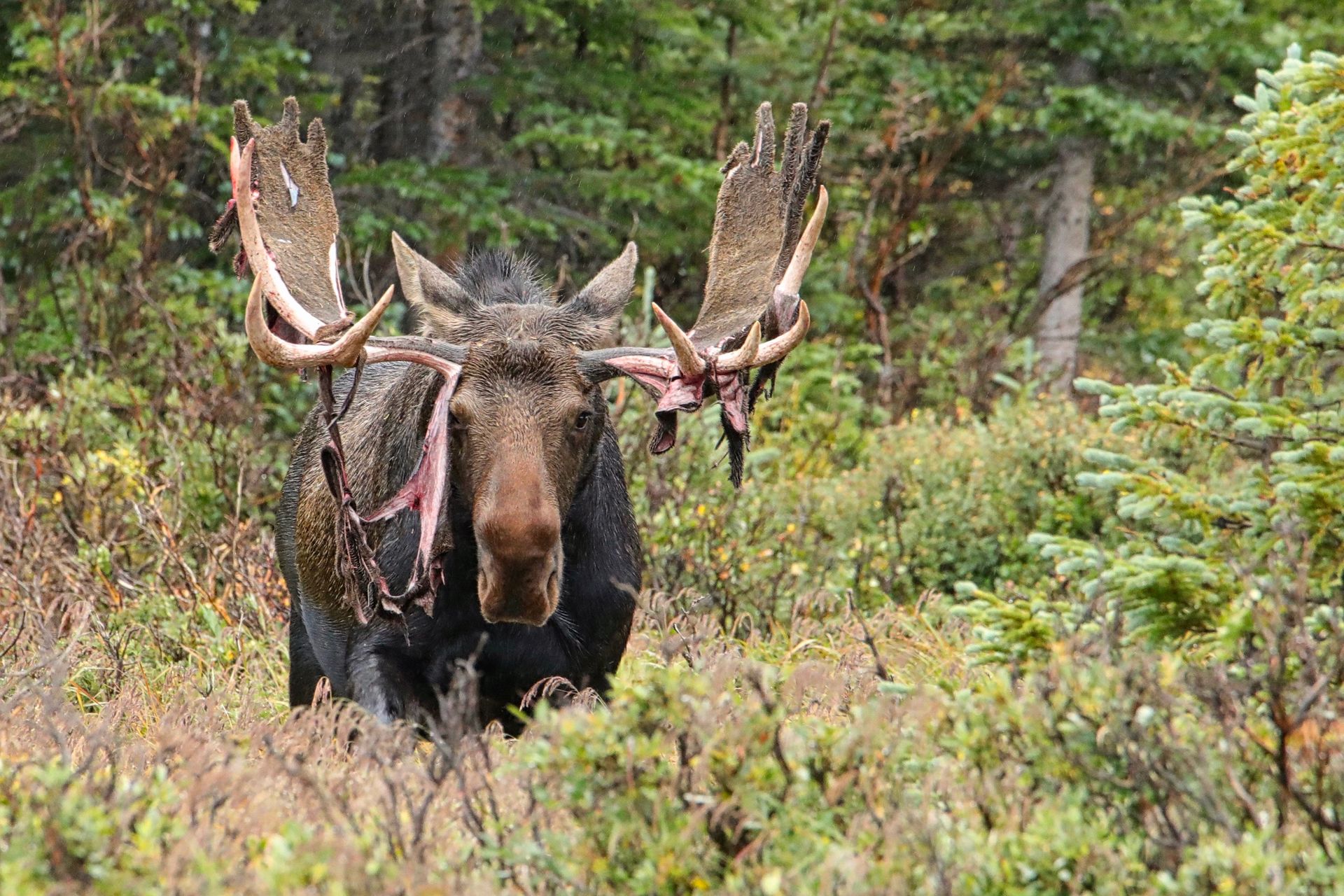
My most memorable encounter with a moose shedding his velvet was on September 2, 2022. I was across a field, my zoom lens extended to its full length, photographing a dominant bull moose. The velvet was dangling, blood still showing on his antlers from the separation of the skin from the bone.
That was when the dynamic bull turned, his eyes directly on me, his dreadlocks hanging to his chin. Watching him, I captured several images as his eyes were intent at my intrusion. My camera was in action, when he took a couple of steps in my direction. While he was across the field, I could almost feel the rage of testosterone.
My camera came down, the moose still glared. Understanding, I moved backwards, and retreated into the trees leaving the moose at peace. As I exited, I hummed to myself, “"Every little thing’s gonna be all right.” After all, no better way to celebrate dreadlock season than singing the lyrics of a Bob Marley song.