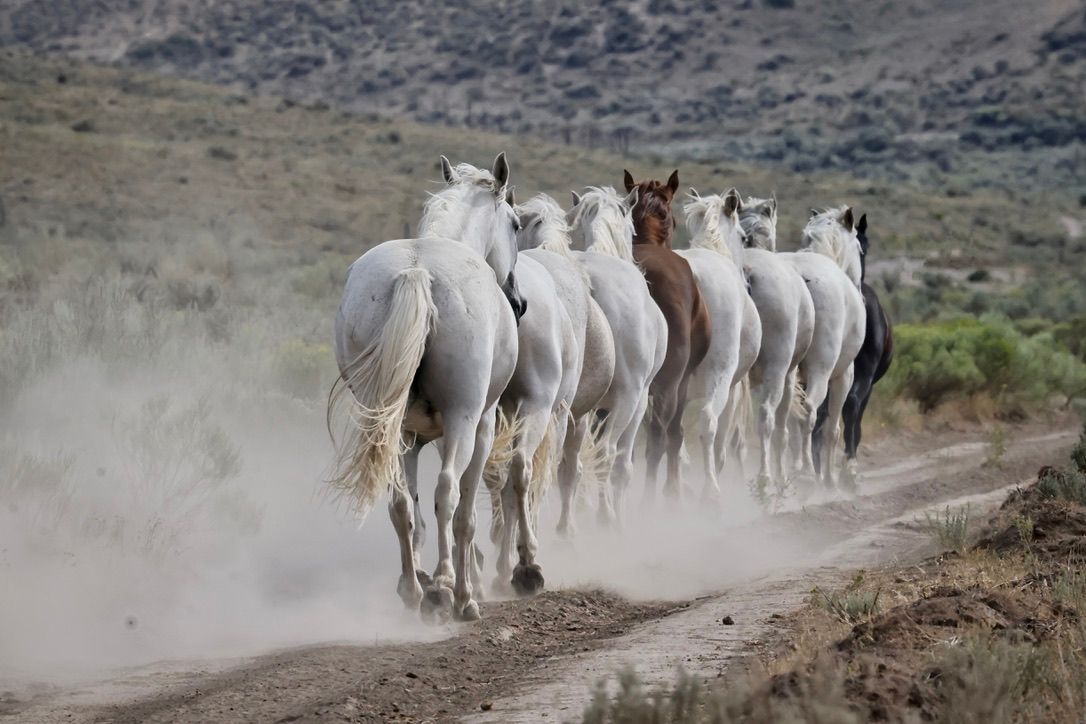
Is Pika pronounced “PY-kuh” or “Pee-kuh”?
Pika are fast, incredibly fast
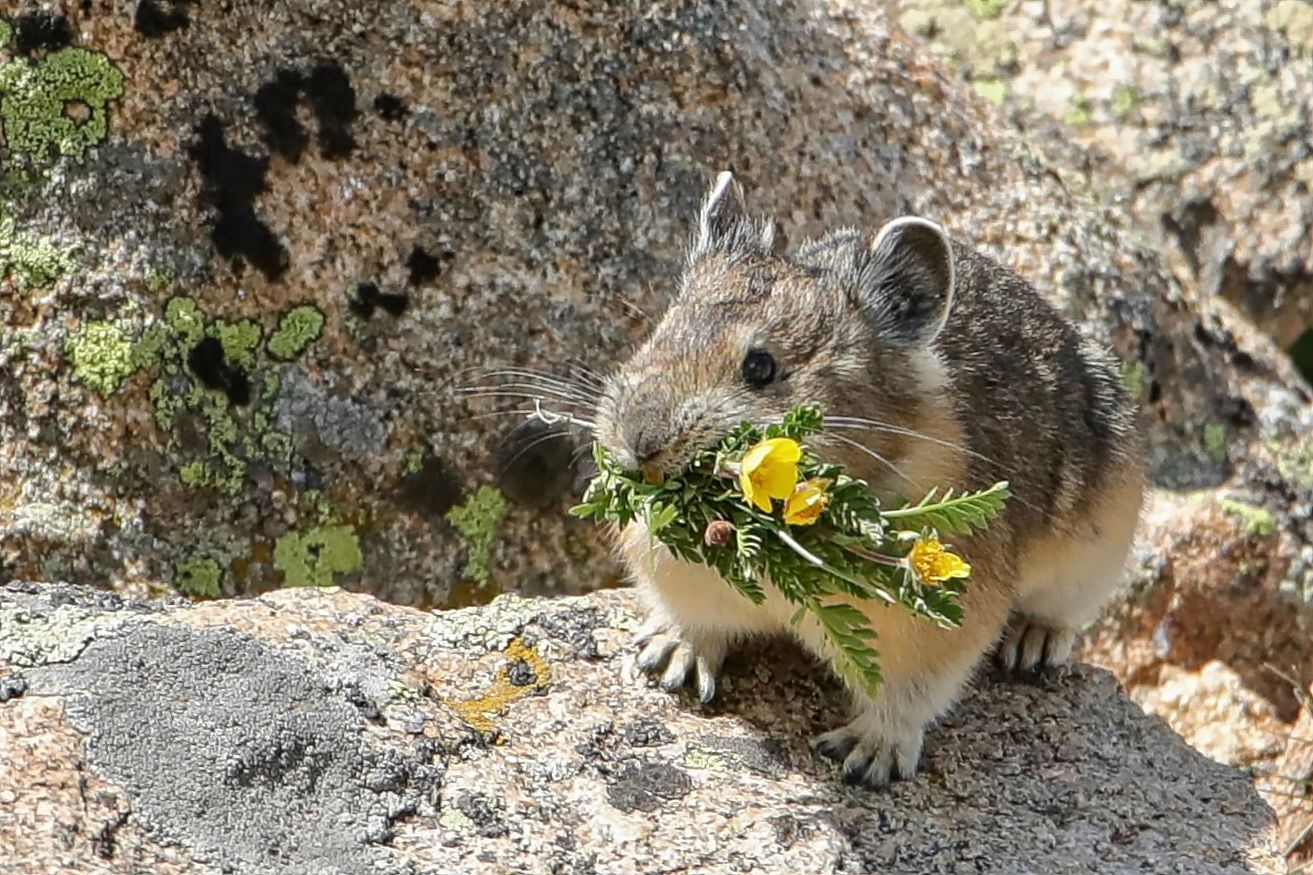
Pika are fast, incredibly fast scurrying across the mountain tundra in Rocky Mountain National Park. Over grasses, around flowers, under rocks, and into dens these adorable creatures scurry. So, so fast.
Do you know how many shots I have to take to capture one good, clear, beautiful pika picture? So, many…Then, on the computer, I have to go through each and every one to select maybe one out of every hundred pictures that captures my interest. Still, pika are a fun photography challenge.
As I’m on the tundra, my 600 mm lens focuses on the rapid running member of the rabbit family, I hear other photographers talk. “Have you seen any PY-kuh?” “Yes,” the words come from behind a camera. “There are three pretty active Pee-kuh gathering grass and flowers?” The person responds, “I just love PY-kuh.” From the camera, an eye attached to the viewfinder, the photography responds, “Pee-kuh are sooo cute.”
I was up on top of Trail Ridge Road with a photographer friend, and our conversation was similar. He asked, “Are there any good spots to photograph Pee-kuh?” I answered, “A couple where the PY-kuh are pretty active.” It was an awkward moment, feeling like I’d corrected him, when he asked, “Is it PY-kuh or Pee-Kuh?” Smiling, I answered, “Actually, it is either one.”
The name of the cute little alpine-dwelling rabbit is pronounced "PY-kuh" (rhymes with "hike-uh"). However, in other English speaking nations like England and Canada, naturalists also accept the pronunciation "PEE-kuh".
Pika (or Pee-kuh) are remarkably small, compact mammals the size of a large hamster.
Pee-kuh (or PY-kuh) live in cold, high-altitude alpine regions and rocky slopes throughout western North America and Central Asia. They are highly sensitive to heat and rely on these elevations, typically between 8,000 and 13,000 feet, to survive the summer months.
So photographing them on the tundra is great fun. The pika scurry out over the rocks like traversing a maze, pop out on the cold-hardy, low-growing grasses. There they both feed and capture their food for the winter. With a mouth full of tundra vegetation and wildflowers, they scurry back to their dens.
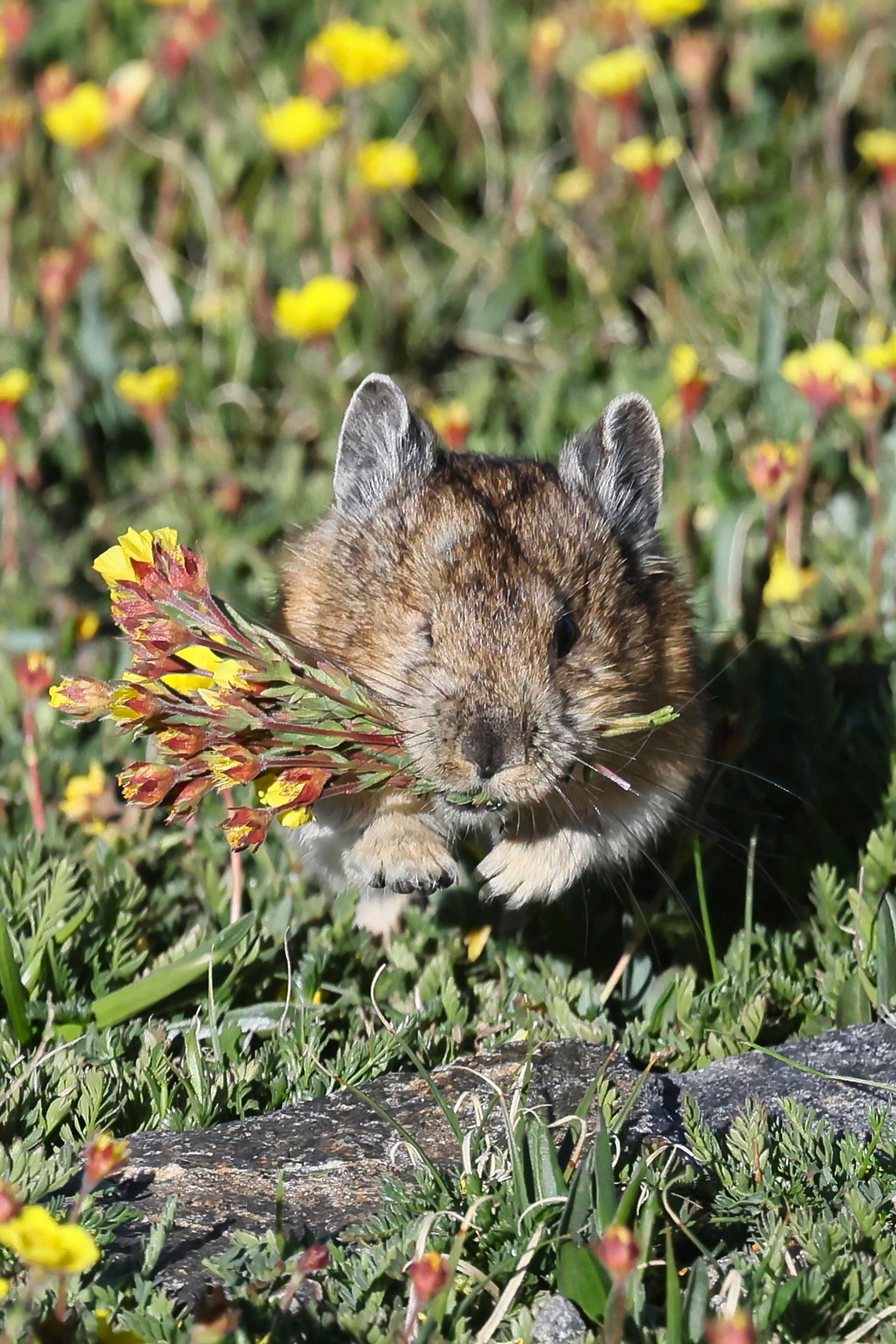
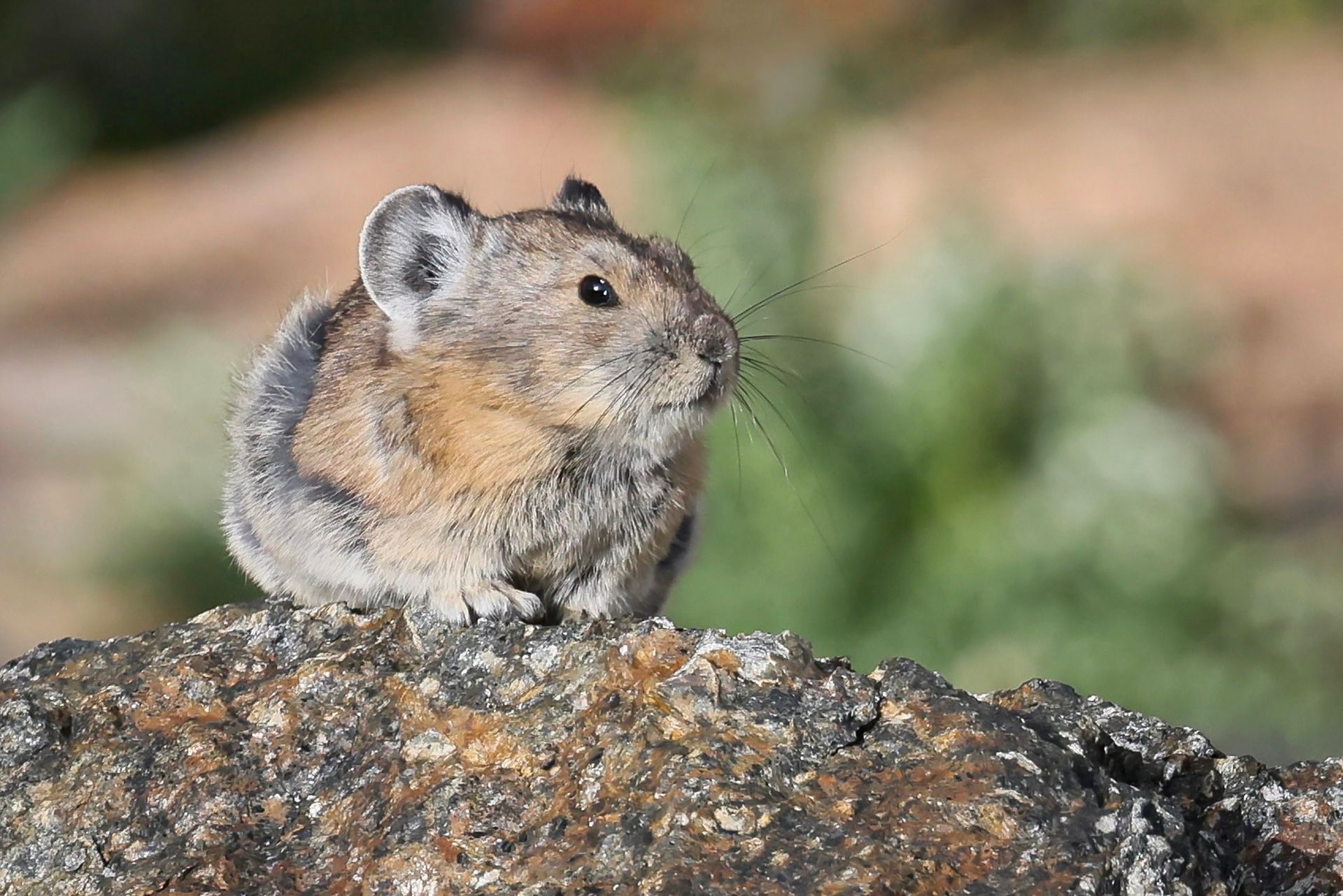
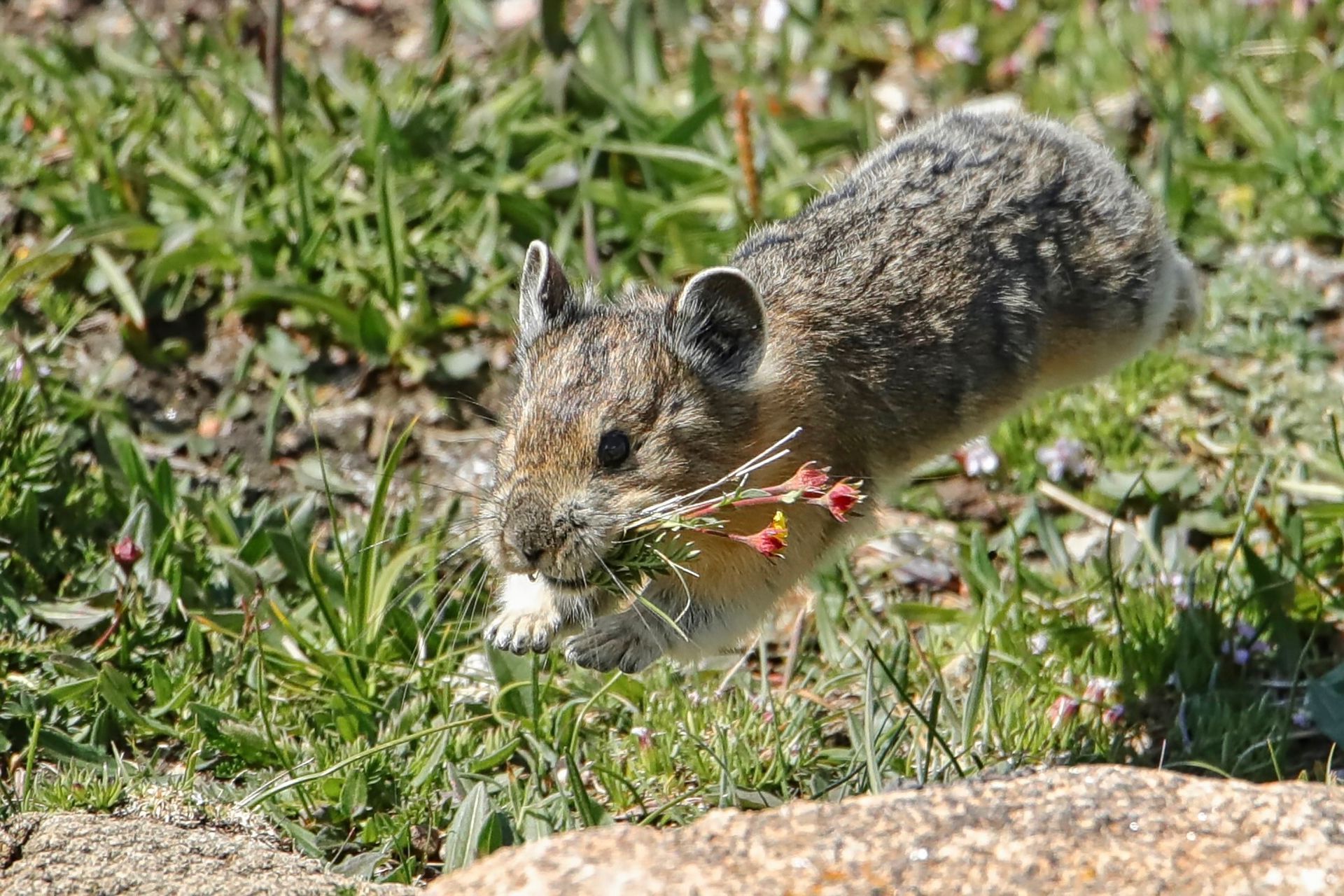
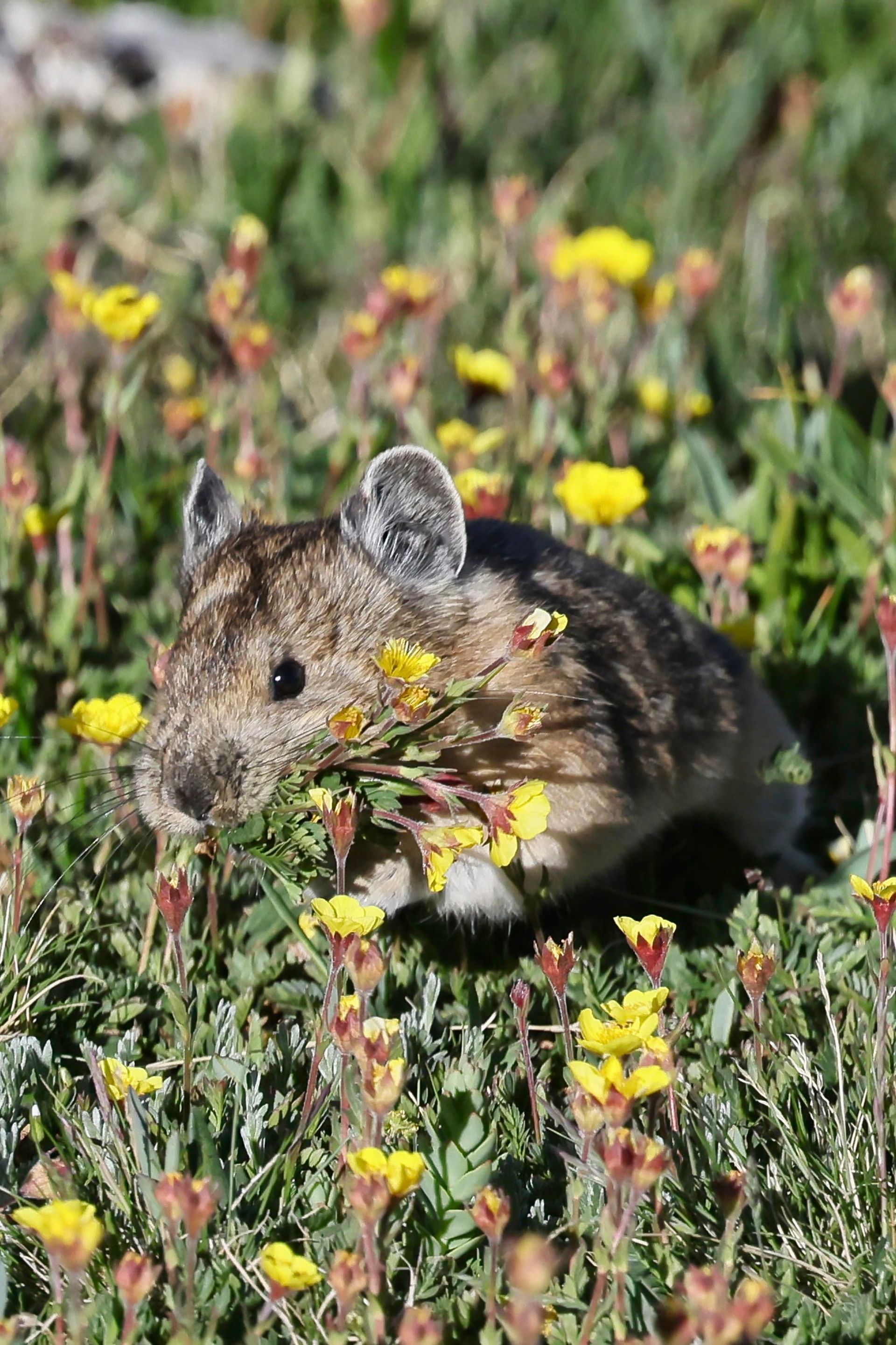
Pika do not hibernate. To survive the long, snowy Trail Ridge Road winters, Pekka spend the summer months gathering wildflowers and grasses. They lay these plants on the rocks to dry in the sun—to prevent mold—and stash them in massive, hidden mounds called "haypiles". During the freezing winter, they stay warm in their dens and rely on these food caches for their survival.
Sadly, because of their sensitivity to heat, global warming threatens the American pikas. Rising temperatures limit their foraging time, reduce the insulating winter snowpack, and increase physiological stress, causing potential extinctions in lower-elevation habitats.
Because pika have thick fur and a high resting body temperature, they can overheat and die when exposed to prolonged summer heat. The American pika can experience heat stress at temperatures as low as 78° F. Thus, climate change is forcing pikas to retreat to high-altitude refuges, shrinking their viable habitat and disconnecting populations.
Studies, including those in Rocky Mountain National Park show the pika is an indicator species for the potential effects of climate change. Pikas are abundant in Rocky Mountain National Park, but concerns exist that their sensitivity to summer heat and the lack of snowfall for insulation in the winter may result in declining numbers. Although pikas are not currently threatened or endangered, they are being monitored to ascertain changes in their locations in the park (https://www.nps.gov/romo/learn/nature/pikas).
A 2025 study at CU Boulder carried a warning regarding the American pika. The study drew on long-running surveys of pikas living south of Rocky Mountain National Park. The researchers discovered that the “recruitment“ of juveniles seemed to have plummeted since the 1980s. In other words, this population was becoming dominated by older adults, with fewer juvenile pikas being born, or migrating in, to take their place, threatening the pika population. (Ray, C., & Vidrio, J. (2025). Long-term data suggest a severe decline in recruitment of the American pika on Niwot Ridge, Boulder County, Colorado. Arctic, Antarctic, and Alpine Research, 57(1).
So whether we pronounce pika or pekka as Py-kuh or Pee-kuh, these adorable little rabbit-like creatures are an example of how our natural work may be changing. It’s one of the motivations for capturing thousands of pekka photographs to have a few wonderful ones of the American pika that are currently active in Rocky Mountain National Park.